Most likely 64 years ago tonight there was a PTA party in the county of Marin, California. I provide you with the handmade invitation from Montez Lawton's scrapbook.
So why can I narrow this down to 1951? The give away are the first few lines on the inside of the card:
"Come on to our school, our school,
We geeve you—dinner!"
This is a word play on the Rosemary Clooney 1951 hit "Come On-a My House." Too many people will have no idea who Rosemary Clooney was, unless they just think of her as George's aunt. And even fewer people will know the people are who are referred to in the information below from Wikipedia:
"Come on-a My House" is a song performed by Rosemary Clooney on her album Come On-A My House, released on June 6, 1951. The song was written by Ross Bagdasarian and his cousin, the Armenian American Pulitzer Prize winning author William Saroyan, in the summer of 1939, while driving across New Mexico. The melody is based on an Armenian folk song.
It was not performed until the 1950, off-Broadway production of The Son. The song did not become a hit until the release of Clooney's recording.
It was probably Saroyan's only effort at popular songwriting, and it was one of Bagdasarian's few well-known works that was not connected to his best-known creation, Alvin and the Chipmunks. Bagdasarian, as David Seville, went on to much fame with his Chipmunks recordings.
…the song touches upon traditional Armenian customs of inviting over relatives and friends and providing them with a generously overflowing table of fruits, nuts, seeds, and other foods. (SOURCE: Wikipedia)
So take a minute and imagine the PTA party back in '51. I'm betting there were a lot of crepe paper decorations.
Another card from Montez Lawton's scrapbook. This is quite small, handmade using construction paper and what appears to be a photo and text cut from a magazine. There is no signature. Perhaps it was made by one of her students.
____________
And thank you to all who have bought copies of my new book. I hope you enjoy it.
I won't bother to do any writing about this beer company since everything you could want to know is available here and here.
I can say that I've been to the brewery in Fort Bragg, California, North Coast Brewing Company, which currently owns the rights to the Acme name. Unfortunately I don't drink beer so I can't make any comments about the product.
This ad is the back cover of the 1944 The Playgoer from Montez Lawton's scrapbook.
Chinatown, in San Francisco, California, is the oldest Chinatown in North America and the largest Chinese community outside Asia. Since its establishment in 1848,it has been highly important and influential in the history and culture of ethnic Chinese immigrants in North America. Chinatown is an enclave that continues to retain its own customs, languages, places of worship, social clubs, and identity. There are two hospitals, numerous parks and squares, a post office, and other infrastructure. Visitors can easily become immersed in a microcosmic Asian world, filled with herbal shops, temples, pagoda roofs and dragon parades. In addition to being a starting point and home for thousands of Chinese immigrants, it is also a major tourist attraction, drawing more visitors annually than the Golden Gate Bridge. (SOURCE: Wikipedia)
In the 1940s nightclubs in Chinatown became very popular with the soldiers passing through town on their way to the Pacific. These ads are all from the Curran Theatre’s The Playgoer magazine that is from Montez Lawton’s scrapbook (click on her name in the labels to see more).
Things get a little confusing when researching these places. In one piece it's stated that Club Shanghai was owned by Fong Wan, a famous Chinese herbalist. He called his shows:
'the Chinese ‘Folies-Bergere’ of the Americas.' He boasted, 'Our entertainment costs more than $2,000 per week' and offered what had become a nearly standardized Chinese-American menu. Still, patrons could order 'other native dishes upon request.' (SOURCE: Flavor and Fortune)
Obviously the problem is that the ad above says it was owned by D.W. Low. I'm throughly baffled, but I'll give you what I found.
To read about the different clubs, the entertainers, and the food visit here and here.
Click on image to see it larger. There's a variety of ephemera online from some of these places:
here to see the cover of a menu for Shanghai Low, here to see a postcard of the interior of Club Shaghai, here to see a postcard of Shanghai Low, here to see a photo holder for Club Shanghai, here to see a photo of D.W. Low, owner of Shanghai Low, in traditional Chinese clothing here for another menu cover of Shanghai Low, here to see a bit of the exterior of Shanghai Low on Grant Avenue,
and here to see a photo of the interior of Shanghai Low.
Click here to read about Ed Pond, owner of Dragon's Lair.
Click here to see a menu from Club Shanghai featuring a photo of showgirl Miss Lana Wong and the owner, Fong Wan.
I did not find any ephemera for Lion's Den or Dragon's Lair.
Click on image to see it larger.
Sadly, I'm not finding anything definitive about these old clubs. It's just bits 'n' pieces from the past like these old advertisements; places and performers long gone. It would be nice if there was a book about this period in Chinatown featuring the stories and ephemera. Perhaps there is and I just haven't found it.
————— UPDATE: From reader Willard:
Club Shanghai opened around 1913 by D.W. Low. My father, Fong Wan, who had an interest in this nightclub, took sole ownership of it in 1946 until around 1956.
It was my father who brought Lana Wong from China to perform at his Club Oakland, formerly the New Shanghai Terrace Bowl in Oakland CA before her performing at the Club Shanghai. Barbara Yung, was the featured dancer after Ms. Wong left my father's employ.
There were two Slapsy Maxie nightclubs that were popular back in the ‘40s and 50s. One was located in Los Angeles, the other in San Francisco. This ad is for the San Francisco location and is in the 1944 The Playgoer magazine that Montez Lawton kept in her scrapbook.
Click on image to see it larger.
I’ll give you a little information about the clubs and this fellow with the top billing, Georgie Price.
The clubs were named after American boxer/actor Max Everitt Rosenbloom who was known as "Slapsie Maxie." He was born on November 1, 1907 in Leonard’s Bridge, Connecticut. He died from Paget’s disease of bone on March 6, 1976 in South Pasadena, California. He got the name Slapsie Maxie from a journalist who was making reference to his open gloved boxing style.
Few fighters stepped into the ring more often than Maxie Rosenbloom, who fought 299 times in sixteen years. Raised on the Lower East Side of New York, Rosenbloom left school after third grade and later served time in reform school. Reportedly, actor George Raft spotted the young Rosenbloom in a street brawl and advised him to become a boxer.Rosenbloom had an unusual style. He was a weak puncher and often slapped at his opponents with an open hand—earning him the nickname "Slapsie"—but he was a consummate defensive fighter and did whatever was necessary to avoid getting hit. He won the vast majority of his fights, although he only recorded nineteen knockouts in his entire professional career. (SOURCE: Harry Greb)
In 1930, he won the New York light heavyweight title. In 1932, he won the Light Heavyweight Championship of the World. He held and defended the title until November 1934, when he lost it to Bob Olin.As a professional boxer, Rosenbloom relied on hitting and moving to score points. He was very difficult to hit cleanly with a power punch and his fights often went the full number of required rounds. In his boxing matches he suffered thousands of head punches, which eventually led to the deterioration of his motor functions. (SOURCE: Wikipedia)
The story goes that the club was owned by mobster Mickey Cohen, but according to this December 1, 2011 article in the L. A. Times by Patrick Goldstein, that’s not the story.
According to most historical accounts, Maxie Rosenbloom, a former prizefighter, was simply the front man for Cohen, who actually owned the joint. In the film (The Gangster Squad), Cohen has a special table at the club, which has his bookmaking operations housed upstairs. But the nightclub's ownership history turns out to be more complicated than I realized.
After my story ran, I got an email from Marti Devore, setting me straight. Even though the club was originally in Cohen's hands, from 1947 through 1950 it was owned by Sy Devore and his older brother, Al. Marti, who is Al's daughter and Sy's niece, is the Devore family's unofficial historian, which, as it turns out, makes her something of an expert on Hollywood history too.
Her uncle Sy, who ran a men's store originally located on Vine near Sunset, was known for years as Hollywood's "tailor to the stars." Born in Brooklyn, Sy Devore was a natural-born hipster, operating a store in New York, at Broadway and 42nd Street, before he moved west.
Sy spent a lot of time in Harlem, running with the likes of Count Basie, Ella Fitzgerald and the Dorsey brothers, who bought their threads at his store and were the ones who told him that he'd be a natural fit in Hollywood. So he moved west, doing custom tailoring and throwing parties. His regular showbiz customers included Frank Sinatra and most of the Rat Pack as well as Bob Hope and Nat King Cole. Being flush with cash, they made Sy a lot of money. Marti says that Jerry Lewis used to boast that after hitting the bigtime, he bought 100 suits from Sy in 1949 alone.
Being so good at hanging out, it was inevitable that Sy would try his hand at running a nightclub. He knew Slapsy Maxie well—according to Marti, the ex-boxer turned bit actor showed up nearly every day at a barber shop that was located inside Sy's Vine Street store. So Sy and Al bought themselves a nightclub. (SOURCE: LA Times)
Click here to see a photo of the outside of the Los Angeles club.
You can see matchbook covers from the San Francisco and Los Angeles clubs here, here, and here.
And here and here are the outside of a photo holder.
Here is a video of Jerry Lewis recalling his appearance with Dean Martin at the Copa in New York and in Los Angeles at Slapsy Maxie’s.
Now, Georgie Price, headliner at the San Francisco Slapsy Maxie’s.
Georgie was born on January 5, 1901 in New York City. He died from a heart attack on May 10, 1964 in New York City.
When Georgie was born, his mother missed work as janitor of the building, and the landlord evicted the entire family of 11, carrying Mrs. Price and Georgie into the street in her bed. A famous lady social worker saved them, letting the family return home.
Georgie started singing and dancing on the streets and subways of New York at a very early age, and in 1907, accompanied an older brother on his dry-cleaning delivery rounds. He sang for the wife of Gus Edwards, a Vaudeville entrepreneur, and was adopted by the Edwards, thereafter taking Edwards as a middle name. He and "Lila Lee" starred as "Little Georgie and Cuddles" in Gus Edwards song review, "School Days". Surrounded and adored by old-timers of Vaudeville, he mastered many arts, including tap dancing, soft shoe, gag-writing, double-talk, and especially imitation, at which he was regarded as one of the best, not only for his accents and voices, but also for his ability to imitate dancers, singers (including Enrico Caruso, who offered to adopt him), and entertainers of the past—as taught to him by those who remembered them best.
He fell on hard times during his adolescence, when though short, he could no longer play children. Bribing an elevator operator at the Shuberts' office building, he donned the operator's uniform, and imprisoned one (or more) of the Shuberts between floors, just long enough to audition. He became their "headliner", replacing Al Jolson, and later became the first non-classical singer to get a long-term recording contract with RCA Victor.
In the Thirties, he took the advice of his friend Bernard Baruch to buy a seat on the New York Stock Exchange, beginning a second career, but continued on in show business, notably as president of The American Guild of Variety Artists, as a frequent emcee of charitable fund-raisers, as the host of "The Big Time", a CBS radio show in the early Fifties, and as a spokesman for Vaudeville and retired Vaudevilleans. (SOURCE: IMDb, Marshall Price)
On March 26, 1944 Montez Lawton went to see the musical Blossom Time at the Curran Theatre in San Francisco with a man named Stewart. This is the exact same sentence that began my last post, but now I'm going to deal with some ads that were in the Curran Theatre magazine that Montez saved.
If you go to the theatre and buy a program or get a Playbill there are always lots of ads telling you of places you could go following the show. I'm going to deal with some rather exotic places the Curran advertised back in '44.
Click on image to see it larger. (SOURCE: The Playgoer)
You really couldn't grow up in the San Francisco Bay Area and not know about Finocchio's until it closed in 1999. I never got to go to there show, but it was supposed to be classy, but brassy. I wish I'd seen it.
Joe Finocchio opened his famed San Francisco nightspot after a customer, drinking in his father's speakeasy, performed an imitation of the legendary Sophie Tucker. This gave Joe the idea of a nightclub with men performing with all the glitter, sophistication and glamour of sophisticated women.
He opened a speakeasy in 1929 at 406 Stockton St, which he managed with his wife Marjorie. Initially the show was a female impersonator paired with a exotic dancer – hula or Chinese.
In 1933 with the repeal of Prohibition, it became legal, and Joe hired more dancers and expended the floor show. In 1936 the police raided the club and arrested five female impersonators, including Walter Hart and Carroll Davis, and the owners for employing entertainers on a percentage basis. Police Chief Quinn ‘declared war’ on female impersonators, and also revoked the permit of the 201 Club.
After the raid, Finocchio’s moved to a larger location at 506 Broadway, and hired more impersonators. Marjorie planned the entertainment on a grand scale. She booked the finest entertainers, supervised and planned elaborate productions. The club was allowed to exist because it became a tourist attraction, a symbol of the city’s sophistication. Joe had to promise the police that the entertainers would not mingle with the customers. Tourist magazines billed Finocchio’s as ‘America’s most unusual night club’. This was reinforced during the 1939 World’s Fair in San Francisco.
The club always included ethnic impersonators. Li-Kar did a Geisha dance; Billy Herrero recreated Hedy Lamarr in the film Algiers, 1938; in 1940 the club developed an Argentine feature; later Juan Jose did a flamenco dance; Reene de Carlo a hula dance; Bobby de Castro did a striptease in a gorilla costume (this was supposed to be Cuban).
There was little trouble at the club over the years, though military authorities declared Finocchio's "off limits" for selling liquor to WWII military personnel outside of authorized hours. That temporary sanction was lifted New Year's Eve 1943 after Joe Finocchio and other bar owners signed an agreement to limit liquor sales to military personnel to between 5 p.m and midnight. Beer could, however, be sold between 10 a.m. and midnight. The future Tony Midnight, who was working in munitions during the war, snuck into Finocchio’s using fake ID.
Joe Finocchio died in 1986, aged 88. Eve Finocchio, his widow, decided to close the club in late 1999 because of a major rent increase and dwindling attendance. The club closed November 27, 1999. Eve died 2007. (SOURCE, including club photo: Zagria)
Visit the above source link to read more. To see vintage photos, programs, matchbooks, etc. click here.
As to Johnny Mangum the performer, I've found nothing.
On March 26, 1944 Montez Lawton went to see the musical Blossom Time at the Curran Theatre in San Francisco with a man named Stewart. The program from the presentation is glued into her scrapbook. Inside the program I found this in a small envelope. I can only guess that at some point that evening they found an artist, perhaps at the theatre or a restaurant, that did silhouettes.
Think of this post as a continuation of Valentine's Day.
This is a letter from an old scrapbook my friend Bert gave me. It dates from February 24, 1945. A fellow, Van, far away in the Pacific, writes to a woman, Montez Lawton, a schoolteacher, in the San Francisco Bay Area. It would be close to 6 months before the war in the Pacific was over.
Click on any image to see it larger.
To read a little about this Japanese/Phillippines currency click here.
To see other posts from a different scrapbook created by Montez click on her name in the labels below.
Do you have newspaper clippings that extol about a relative or friend? Little pieces of ephemera filed away that you occasionally come upon?
I have several, including one about myself, well actually a drawing I did that was published in the Honolulu Star Bulletin. Most of the others are about my dad or mother. I do have one about a friend who was a singer, one of a friend dressed in a bikini for a local department store, and one of a friend winning a prize. Someday someone will find these after I've died and simply toss them. The person featured in the clipping will find that their fleeting moment of "fame" is officially over.
This fellow, Janvier T. Lee, has probably run close to the end of his shelf life. This clipping is in the Montez Lawton scrapbook. Google his name and nothing shows up. Dig a little deeper and I find that he died on March 7, 1989 at the age of 75 in Danville, California. He was born November 11, 1913 in Nebraska. Doing a small amount of math would indicate this clipping appeared in a local San Francisco Bay Area newspaper in 1946.
The store mentioned, Lucky, was a grocery store. Several years ago it went out of business. Then another company bought what was left of it, including the signage, and opened them back up.
I'm fascinated by how much ephemera I have, including photo collections, that belonged to people originally from Nebraska. How did so much ephemera end up from Nebraska in my hands. I can't think of any other state that features as prominently in my collection.
This week I was given an old tattered scrapbook that belonged to a woman named Montez Lawton. She was an elementary school teacher in Northern California. The book is falling apart, the pages brittle. But inside are a few wonderful items including handwritten get well wishes from her young students.
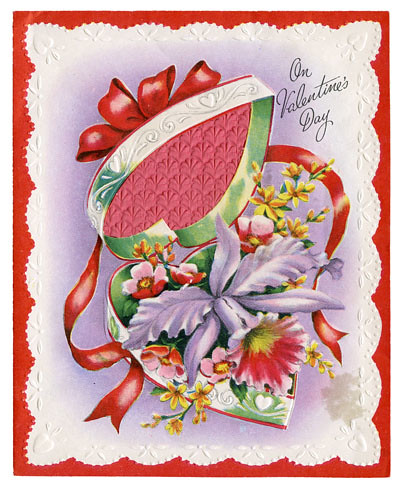
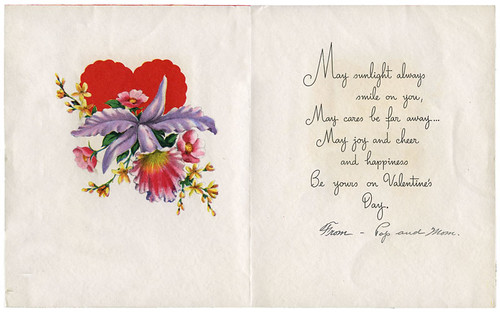
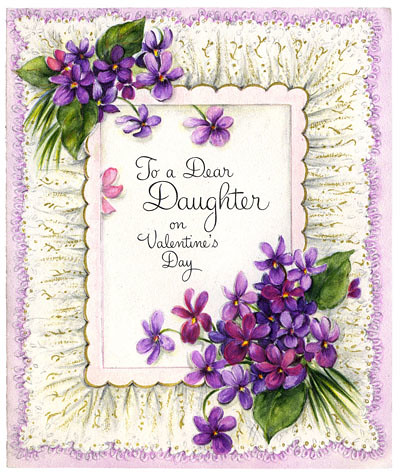
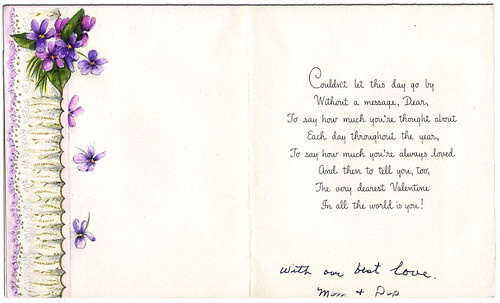
These valentines are also inside, sent to her by her parents. I will take them from the album and put them in my archival albums where I keep all of the valentine's I've found. These are unusual to my collection because I tend to find and buy ones that were clearly for children. These are a bit more adult.
Click on any image to see it larger.
Published by Rust Craft.
Published by The Wishing Well (not affiliated with the company now using the name in the UK)
This one might as well be a get well card and indeed I imagine the image was used for a variety of cards. Nothing about it looks like a valentine.
VALENTINE, VALENTINE, wherefore art thou? To see more about this book click on the link in the Amazon column to the left. The book sells used dirt cheap. It's full of fun images from old valentines.
A journey via vintage snapshots through the world of dolls and their owners from the early part of the 20th century to the 1960s. This is volume 7 in the Tattered and Lost Vernacular Photography series.
BUCKAROOS AND BUCKARETTES
Tattered and Lost: Buckaroos and Buckarettes is a collection of vintage snapshots for those who remember riding the range when they were kids. These adventures usually consisted of sitting in front of a black and white television or running around the neighborhood with our shiny six-guns strapped to our sides. Our imaginations created entire worlds that never existed. We sang along with our heroes, convinced that with a song in our heart and a six-gun on our hip we could vanquish evil. This book is dedicated to all the other buckaroos and buckarettes who rode their imaginations into the sunset while humming Happy Trails.
CAKES, PICNICS, AND WATERMELON
Collecting vintage photographs starts out innocent enough with a few snapshots here and there, but at some point it becomes a bit more obsessive and you find yourself longing for the next image that makes you laugh or ponder the irrefutable confusion of being human. This book, Tattered and Lost: Cakes, Picnics, and Watermelon, the fourth in a series, shows the quirky world of sharing food from the 1890s to the 1970s in the United States. Sit back and enjoy watching people cut cakes (some people do it with such style!), go on picnics without your relatives, and watch people eat watermelon. Yes, eat watermelon. An odd category for sure, but one sure to make you smile.
Vernacular Photographs
Tattered and Lost: Vernacular Photographs, is volume 1 in my self-published books showing photos from my collection. Photographs play off each other on facing pages asking the viewer to come to their own conclusion as to what they are looking at. Included is a photo of the Pennsylvania Railroad S1 steam locomotive, designed by Raymond Loewy, on display at the 1939 New York World’s Fair. And one of the few known copies of a photo taken by Rudolph D’Heureuse in 1863 proving there were indeed camels used by the U. S. Cavalry is included. So take a step back in time and visit with some folks who long ago smiled and said “cheese” never knowing how long those smiles would last.
TELLING STORIES
In need of writing prompts? Looking for a gift for a friend who loves vintage photographs? Tattered and Lost: Telling Stories is now available from CreateSpace and Amazon. Click on the image to find out more!
CHILDHOOD
A new and expanded edition of Tattered and Lost: Childhood. Available at CreateSpace and Amazon. Better price, more pages, larger trim size. Click on the image to read more about it.
BOOKS FOR THOSE WHO LOVE EPHEMERA AND VERNACULAR PHOTOGRAPHY
WHAT IS TATTERED AND LOST EPHEMERA?
Tattered and Lost EPHEMERA is about some of the items in my collection including: letters, postcards, valentines, menus, recipe books, children's books, magazines, greeting cards, paper dolls, vernacular / found photos, and whatever odd things I find stuck in the nooks and crannies of this house.
This site is affiliated with Tattered and Lost PHOTOGRAPHS.
Photographs of the ordinary by the ordinary.
All photos are from my private collection. They may NOT be used in any manner without my permission. I retain all copyrights for everything published on this site unless specified as belonging to someone else.






 Posts
Posts


